A business trip to Brussels often comes with an awkward schedule. You might have an hour between appointments, a free afternoon after a conference, or just enough time to explore before catching a train. Fortunately, Brussels is particularly well suited to short visits.
The historic centre is compact, public transport connects the main business districts, and several of the city’s best-known landmarks are within walking distance of one another. Even a 45-minute break can be enough to discover an impressive square or enjoy a proper Belgian coffee.
The trick is to plan around your meeting location and available time. A short walk through the Grand-Place can be just as memorable as an afternoon in a museum, especially when another appointment is waiting on your calendar.
Start With the Time You Actually Have
Before opening a map, check how much free time remains after accounting for travel between meetings. An apparent two-hour gap can quickly shrink when you add transportation, lunch and the possibility of a delayed appointment.
For sightseeing during a working day, choosing one neighbourhood generally makes the most sense.
| Available time | Suggested activity | Best location |
| 30–45 minutes | Coffee and a short walk | Grand-Place |
| 45–60 minutes | Architecture and city views | Mont des Arts |
| 60–90 minutes | Historic galleries and chocolate shops | Brussels city centre |
| 1–2 hours | Parks and European institutions | European Quarter |
| 2–3 hours | Museum visit and lunch | Royal Quarter |
Allow another 15 to 20 minutes as a buffer before your next commitment. Brussels traffic, public transport disruptions and unexpected queues can complicate an otherwise straightforward itinerary.
If your meetings take place near Brussels-Central railway station, the historic centre and Royal Quarter offer particularly convenient options. For appointments around Schuman or Luxembourg Square, exploring the European Quarter will save valuable travelling time.
If you’re staying overnight, your hotel location can make sightseeing easier to fit around work. La Bourse Hotel, situated opposite the Brussels Stock Exchange, puts Grand-Place and several other central attractions within easy walking distance.
Explore the Grand-Place During a Short Break
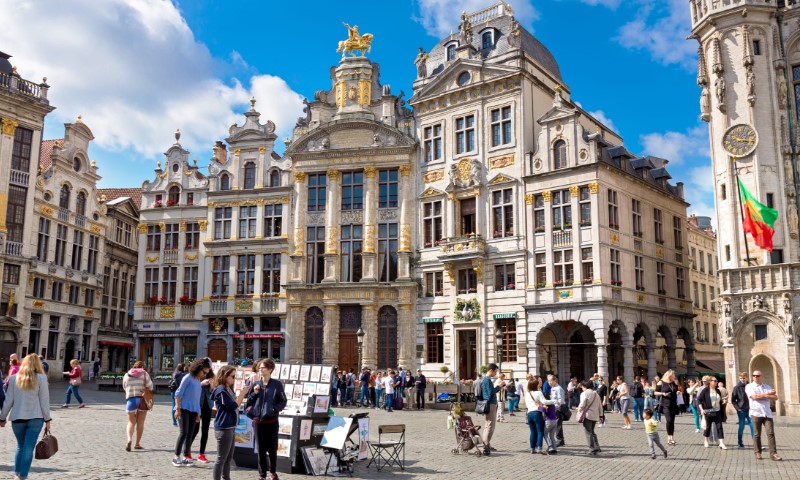
Few European capitals offer such a spectacular introduction within such a small area.
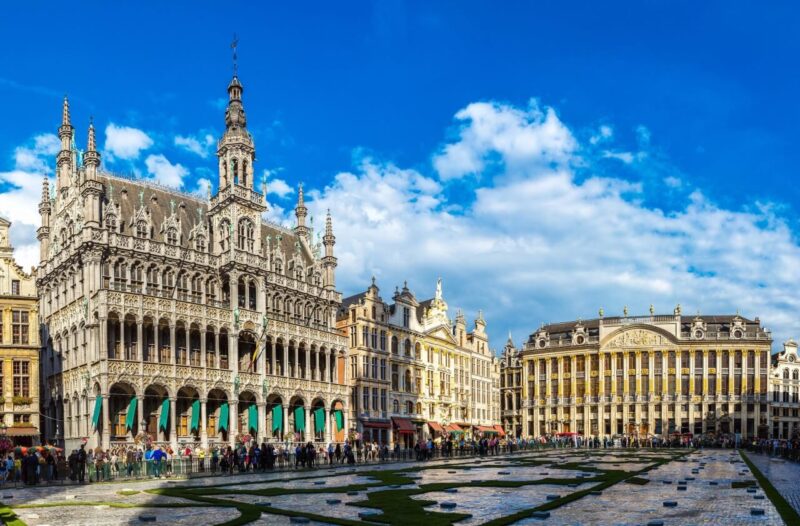
The Grand-Place is surrounded by elaborate guildhalls, the Gothic Town Hall and the King’s House, which now accommodates the Brussels City Museum.
According to UNESCO’s historical account, much of the square was rebuilt following a devastating French bombardment in August 1695. The remarkably ornate buildings standing today reflect the wealth and ambitions of the city’s merchant guilds.
The square became a UNESCO World Heritage Site in 1998.
A visit can take as little as 15 minutes, although half an hour gives you enough time to appreciate the architecture and explore a few neighbouring streets.
For visitors working near the city centre, a simple route works well: start at Grand-Place, walk towards the narrow streets surrounding Rue du Marché aux Herbes, and finish at the Galeries Royales Saint-Hubert.
You’ll return to work with a much better impression of Brussels than a quick glance from a taxi window could provide.
Discover the Galeries Royales Saint-Hubert
Only a few minutes from Grand-Place, the Galeries Royales Saint-Hubert offer a pleasant escape from crowded streets and unpredictable Belgian weather.
Opened on 20 June 1847, the galleries were among Europe’s pioneering covered shopping arcades. Their soaring glass roof, decorative façades and elegant shopfronts still evoke the fashionable society of 19th-century Brussels.
The galleries’ official website provides a look at the shops and cultural venues occupying the historic arcade.
For business travellers, the location has several advantages. You can enjoy a coffee, buy Belgian chocolates for colleagues or browse the boutiques without committing to a lengthy excursion.
The covered passage is also particularly useful during rainy afternoons, when outdoor sightseeing becomes less appealing.
If you’re carrying a laptop bag or wearing formal business clothes, the galleries offer a comfortable place to spend a spare half-hour.
Take in the View From Mont des Arts
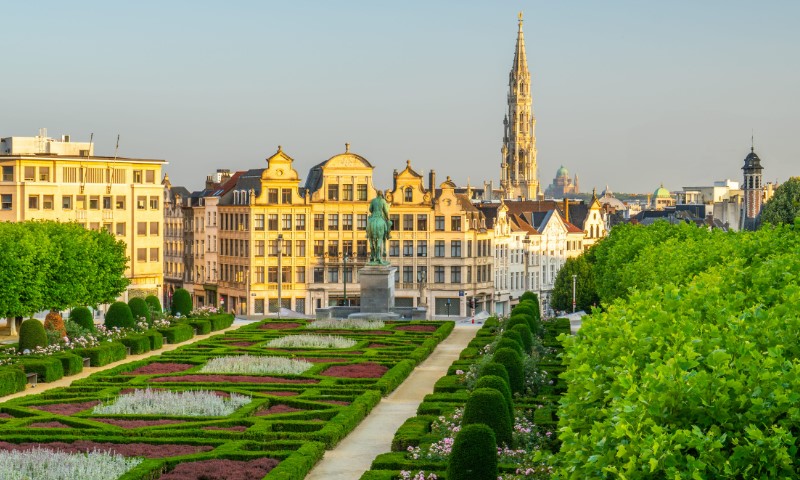
Between the historic centre and the Royal Quarter lies Mont des Arts, one of Brussels’ most recognisable viewpoints.
From the elevated gardens, visitors can look across the lower city towards the distinctive tower of Brussels Town Hall. The combination of formal landscaping, historic architecture and urban activity makes the area particularly photogenic.
The official Brussels tourism guide describes Mont des Arts as the connection between the city’s upper and lower districts.
A 30-minute walk around the gardens and surrounding streets is usually sufficient for a refreshing break.
If time allows, continue towards Place Royale, where several important museums are concentrated. The nearby Musical Instruments Museum occupies the former Old England department store, an attractive Art Nouveau building dating from the late 19th century.
The neighbourhood is especially practical for meetings near Brussels-Central station, which is within easy walking distance.
Make the Most of a Meeting in the European Quarter
Business appointments involving EU institutions, international organisations and consultancies frequently take place around the Schuman and Luxembourg areas.
The neighbourhood has its own attractions, and there’s plenty to explore without travelling across the city.
Walk Through Parc du Cinquantenaire
The Parc du Cinquantenaire is an excellent place to stretch your legs between meetings.
Created to commemorate the 50th anniversary of Belgian independence, the park features broad avenues, landscaped lawns and a monumental triumphal arch.
A short walk through the grounds provides a welcome change from conference rooms. Allow 30 to 45 minutes to enjoy the central paths and admire the architecture.
The park is especially convenient for visitors attending meetings near Schuman.
Visit the European Parliament
If you have a longer break, consider exploring the Parlamentarium, the European Parliament’s visitor centre.
Interactive exhibitions explain how European institutions function, with multimedia presentations available in all 24 official EU languages.
According to the European Parliament visitor information, admission is free, and the average visit takes approximately 90 minutes. Advance booking is recommended, while admission without a reservation depends on capacity.
For a shorter outdoor break, walk through nearby Parc Léopold or explore Place du Luxembourg, where cafés and restaurants serve the surrounding international business community.
Enjoy a Proper Belgian Lunch

A business schedule can make lunch feel like another appointment. In Brussels, even a short meal offers an opportunity to experience the city’s food culture.
If you’re around the historic centre, look for a traditional brasserie serving Belgian dishes such as carbonnade flamande, a slow-cooked beef stew, or waterzooi, a creamy regional speciality traditionally associated with Ghent.
For something quicker, a portion of Belgian fries is an obvious choice.
Near the European Quarter, Maison Antoine has been serving fries for generations. The Brussels tourism food guide highlights it as a local institution.
If you’re travelling with colleagues, lunch is also an opportunity to explore somewhere together before returning to the office.
Keep the schedule realistic, however. A sit-down restaurant meal may require an hour or longer, particularly during the weekday lunch rush.
How to Get Around Brussels Efficiently
For most short sightseeing trips, walking and public transport provide the easiest combination.
Brussels’ public transport operator, STIB-MIVB, runs the city’s metro, trams and buses. Travellers can pay directly using a contactless bank card or compatible mobile device.
As of November 2026, the official STIB fare information lists a €2.40 contactless single journey and a daily cap of €8.50. Transfers within 60 minutes are included under the applicable conditions.
For visitors making several journeys, the system eliminates the need to purchase individual paper tickets.
A few practical habits can save time:
- Group sightseeing stops within the same neighbourhood.
- Check public transport routes before leaving your meeting venue.
- Leave extra time for connections during busy periods.
- Use Brussels-Central station as a convenient reference point for exploring the historic centre.
- Keep an eye on the weather, especially when planning outdoor walks.
For longer journeys, consult the official public transport guide before choosing a route.
Save a Museum Visit for a Longer Break
View this post on Instagram
Brussels has an impressive concentration of museums, particularly around the Royal Quarter.
The Magritte Museum is an appealing option for anyone interested in Belgian art. Its collection explores the work of surrealist painter René Magritte, whose familiar images of bowler hats, clouds and unexpected visual combinations continue to fascinate audiences.
The Brussels Museums directory provides visitor information and opening hours.
Alternatively, the Musical Instruments Museum offers an unusual introduction to musical history inside one of the city’s most striking Art Nouveau buildings.
Allow at least 90 minutes for a worthwhile museum visit, plus transport time. Check opening hours and ticket arrangements before going, particularly if your only free afternoon falls on a Monday.
A Little Planning Goes a Long Way
Seeing Brussels between business meetings requires a realistic schedule and a willingness to explore a smaller part of the city properly.
A stroll across Grand-Place, coffee beneath the glass roof of the Galeries Royales Saint-Hubert or a short walk through Parc du Cinquantenaire can add something memorable to an otherwise ordinary working day.
You may leave Brussels having spent most of your time in meetings, but a few carefully chosen breaks can still give you a genuine impression of the Belgian capital.

Hey, I’m Derek Vaughn. I love exploring how tech, business, and productivity come together to shape the way we work. At PulseBlueprint, I write about tools, trends, and strategies that actually make a difference—no fluff, just real-world insights.